Mabuhay!
It’s quite hard for me to write about the Philippines — mostly because I barely wrote a single line while I was there.
So now, I’ll have to rely on memory.
But that already says something about the trip: it was much more about living than documenting.
I didn’t even take my camera out once.
Special thanks to Jura Salomé for capturing the beautiful photo on the cover.
It was less about ticking off places, and more about connecting with people.
And that’s a good thing — because it means I made memories worth holding onto.
Most travelers in the Philippines tend to hop from island to island.
Diving here, exploring there, surfing somewhere else.
Me? I booked the Philippines maybe two weeks before leaving.
It went something like: “Hey Jeff, I think I want to go to the Philippines. You’ve been — where should I go?”
And he goes: “Coron [… blabla …] — and my friend Cyril is going to Siargao, you should go!”
Give or take two hours later, I had my flight to Manila booked, along with a month at Kaya Connections — a digital nomad community.
I ended up staying six weeks in Siargao and honestly, I don’t regret not visiting any other island.
Just before flying there, I spent two days in Manila — and, well, totally useless in my opinion.
I really disliked the city. Skip it if you can.
Nothing to see. The food is average. “China Town” is just a giant mess.
SBG is fancy, but it’s basically a string of malls and stores.
Makati — where I stayed — is supposed to be “hype,” but it’s mostly bars and nightclubs all stacked together.
On the plane to Siargao, as we started our descent, I immediately felt good.
I just knew those six weeks were going to be special.
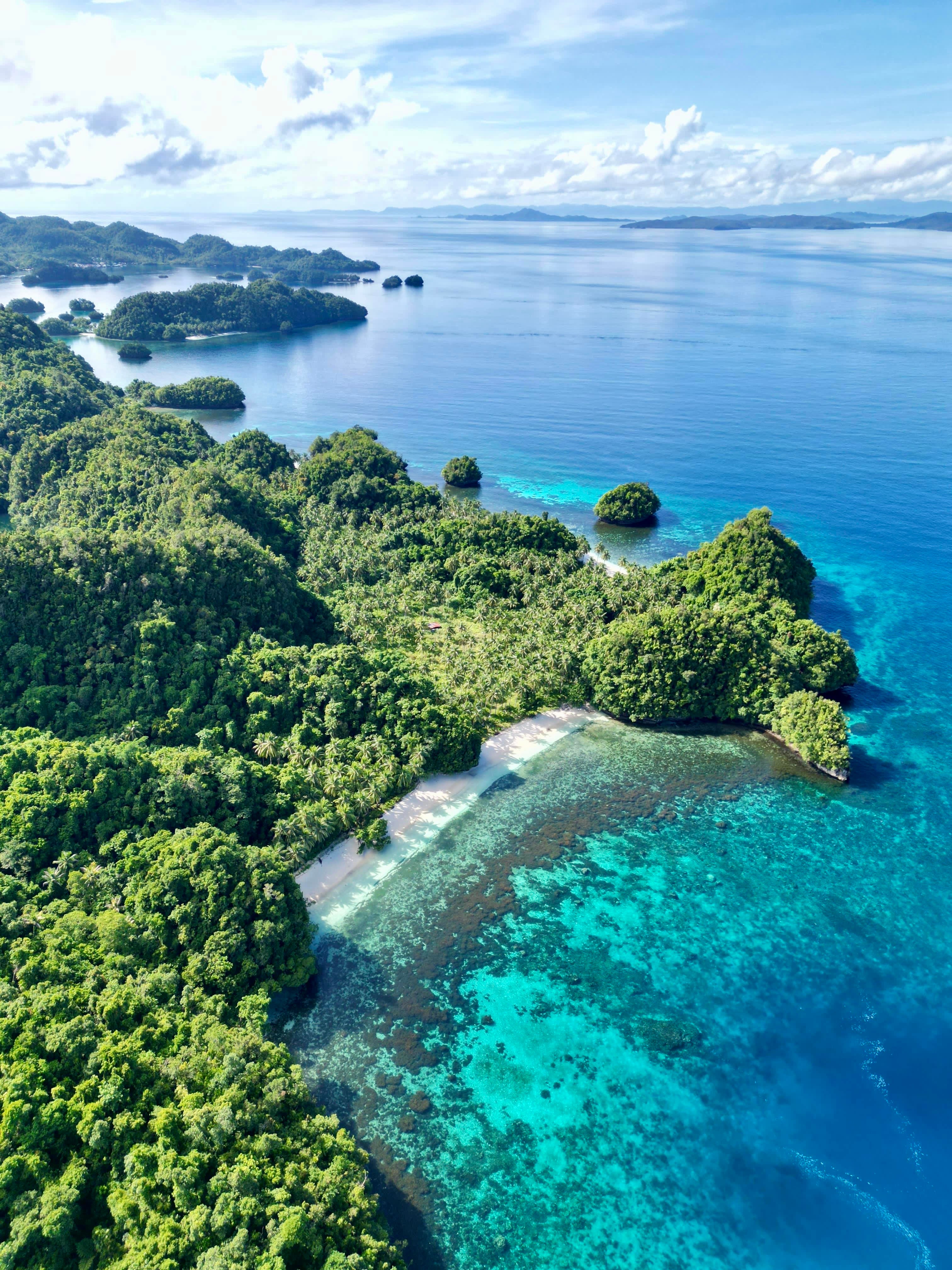
Something about the view — the thick forest, the coastline, the soft light — it gave me that feeling.
The airport? Ridiculously small.
And they charge you a “green tax” to enter the island — something like 100 pesos.
There are two kinds of people here: the newbies, like me — and the ones who are returning. The cursed ones.
You recognize them instantly.
Like this girl, full of confidence, a twist of disdain in her smile — because she knows.
She had her board-suitcase with her on the plane, skipped the tax at the airport (the right-hand exit isn’t covered, so much for your “green fee”), and hopped on a scooter with some guy.
No helmet, of course. Island-style.
Me? My tuktuk guy — Badong — was waiting in his bright yellow ride.
They all have “Piaggio” stickers, but I seriously doubt any of them are actually made by the Italian brand.
Two minutes into the ride…
It starts raining like hell.
I don’t think I’ve ever seen that much water fall that fast.
My first thought?
A little cheeky: “Well… good for her.”
I ask Badong, “Is it like this all the time?”
He laughs.
“That? No. Don’t worry, it’s nothing! Much worse during typhoon season.”
Great. Comforting.
But hey — I’ll trust you, Badong.
Funny enough, I never saw anyone with an umbrella.
And yet, it rains a little bit almost every day.
Such a contrast compared to Japan — where the moment it drizzles, the entire city unfolds its umbrellas in perfect sync.
Here? You just get wet. No one cares.
As I mentioned, I didn’t write much — the first thing I jotted down was:
“Writing from a hammock with an ocean view. Perfect, but hard.”
Yeah… life was tough.
I really didn’t have any expectations coming into Siargao.
Didn’t even know it was the surf island, to be honest.
And so, when trying to think of a narrative — something to tie this chapter together — I find myself stuck.
Because I didn’t follow a plan.
I just lived.
There was no red thread.
Or maybe there was — a subtle, invisible one — slowly forming as I eased into the island way.
I spent my first week up North, in Garcia, five minutes from Burgos.
A friend recommended it, and honestly, I couldn’t have picked a better start.
And that’s how it all began: with surfing.
Learning to Surf
My host in the North, Nuki, is probably the chillest guy I’ve ever met.
He greeted me barefoot, all smiles.
I joked, “I might end up like you after a few days.”
And I kind of did — just not on a scooter. I’m not that crazy yet.
I asked if he had a good surf instructor to recommend.
Without hesitation, he said, “Jake. He’s the best.”
Man — am I glad I asked.
At the time, I had no idea how lucky I got.
Jake turned out to be not only the best instructor, but just one of the nicest humans around.
I messaged him Sunday evening: “Hey, I’d like to surf this week.”
What I didn’t know then was that it was actually Mona, his girlfriend, replying on his behalf:
“Ok, let’s do it tomorrow morning.”
And just like that — it began.
I was set for seven days of morning surf.
8 a.m. sharp, slightly cloudy skies, the rookie out on a massive 9’0 — what we’d later call the speed boat, because the thing is huge.
Jake took me to a newbie spot — just the two of us in the water — to see what I could do.
I sort of knew how to stand up.
Sort of — because, well, it depends. Conditions, timing, your mood, your breakfast… everything.
In France, learning to surf is no joke.
There’s a world of difference between the mellow, forgiving waves of Siargao and the punchy, relentless sets from the Atlantic coast.
Let’s just say I finally understood why people keep coming back here.
To be honest, it’s one of the hardest sports I’ve ever tried.
It’s kind of a bastard sport, really — and progressing is a real challenge.
Shitty forecast? Good luck.
Too powerful? You’re screwed.
Flat? Well, nothing happens.
You’re completely dependent on the conditions — way more than in most other sports.
Even skiing isn’t that dependent on weather, at least to some extent.
Surfing is hard. Physically exhausting.
But as you improve, you start to realize something: the wave is bigger than you.
Not just literally — though yeah, sometimes literally — but in essence.
You’re surrendering to something greater: the ocean.
It teaches you humility.
If you’re not humble, if you don’t know how to read and respect the ocean, it’ll swallow you whole.
At first, you might think you can surf just because you know how to stand up. You catch some small waves, ride the whitewater, and start believing you’ve got it figured out.
Sure. Keep lying to yourself.
Anyway — the next day, we headed to Pacifico.
A real spot.
And by real, I mean: strong currents, a channel that’s hell to paddle through if you don’t read it right, and an actual wall of a wave.
That’s when the technical side of surfing really hits you.
And trust me — it’s way more technical than you’d expect.
But above all, the biggest lesson is this: surfing isn’t just about riding waves.
It’s about learning how to connect with the ocean.
You have to learn how to read the current.
Are the waves breaking left? Right? Both?
Is there a single channel, or can you cut through between two peaks?
Where should you position yourself — on the shoulder? But which one, depending on where it breaks?
Try to spot the peak.
Is the wall forming properly?
Can you see its shadow casting that perfect line?
And then… there’s the line-up.
In Siargao, it’s mostly friendly.
Up north, honestly, it’s been the best line-up vibe I’ve ever experienced.
But the line-up can also be intense.
Crowded. Competitive.
You’re almost never alone out there.
And every decent surfer knows: it’s better to wait for the right wave than to waste your energy chasing everything that moves.
My first real experience of a proper take-off — standing up, dropping into a real wave — happened on that second day in Pacifico.
Don’t get me wrong, I still didn’t know how to surf. I was going straight, no turns, just praying I wouldn’t fall.
But I could catch waves, and that already felt like something.
Most of all, I was ready to commit. Going all in.
And that’s another powerful lesson in surfing: you have to commit.
The wave won’t wait for you.
Hesitate, and you’ll nose dive — meaning your board will tip forward and plunge into the water, sending you flying for a free ride in the washing machine.
Oddly enough, I think I learned more than just how to surf.
Connecting with the ocean is one thing — and it’s a powerful one. It brings you closer to nature and makes you realize how small, how fragile, we truly are.
The ocean is wild. It’s unforgiving.
Surfing also taught me patience — something I don’t always have.
Waiting in the line-up is a humbling lesson in letting time do its thing.
And if you wait, really wait, better waves usually come.
Waves work in cycles — not a fixed rule, but something I started to notice.
If you’re patient enough to wait for the cycle — three or four perfect waves rolling in one after the other — you’re often rewarded.
But if you take just anything, too early, chances are you’ll be caught paddling back while the real set arrives.
That’s when you’re in the channel, cursing yourself: “I knew I should’ve waited…”
And even then, the first wave in the cycle isn’t always the best.
It’s often the second — or the third — that’s the cleanest, the one you really want.
No universal truth here.
Just an observation, from being out there.
Despite being an unforgiving sport, surfing is incredibly rewarding.
It took me about six weeks to really feel it — to experience that moment where it all clicks.
I’ve always loved extreme sports. I crave the thrill of speed.
That burst of adrenaline that forces you into total focus — no distractions, just pure instinct.
You have something on the line: you.
For some, it’s the only way to feel alive.
Which is paradoxical, if you think about it — putting yourself at risk to feel more present, more human.
Skiing downhill at 100 km/h for one minute, riding a 1000cc motorbike at 200 — it’s the same chase.
The need for speed is one way to tap into that intensity.
But surfing — in its own way — offers that same rush.
Only here, it’s slower. Wilder.
And infinitely more humbling.
I experienced that first real thrill for just a few seconds at Pacifico. Then again, briefly, at Quicksilver in General Luna. Just a few seconds — there wasn’t a proper pipeline, just enough to get a taste.
But what I consider my real first ride — the one that felt like the beginning of something — happened during the last week of my trip, the first week of May.
The forecast showed one star. That’s pretty rare in April/May, as it’s already the tail end of the surf season. But this one promised glassy water and no wind.
Jake took me to Little Hawaii. A spot I passed by every day on my scooter, always looking out at the horizon.
It’s a break that sits along a bend in the road — a small hill that curves gently.
Locals often set up BBQ stands there around 5 PM.
A quiet place, almost hidden in plain sight — and yet, that’s where it happened.
I never saw anyone surf there during my entire stay. But that day, we were the only ones in the water.
Believe me — I wish I had a camera to capture it.
You’ll have to do with words.
The forecast didn’t lie. The pipeline was perfect. The water mirrored the sun so clearly it looked like glass.
A subtle shimmer danced across the surface, reflecting the sunlight — like tiny stars scattered across the sea.
Blinding.
Beautiful.
No need to wait for the cycle — it was just rolling, wave after wave. Almost every single one was worth taking. Sure, some were better than others — some even felt “perfecter than perfect” — but I was honestly blown away by the quality of the pipeline.
And the ride.
Man, the ride.
I’m truly grateful to Jake for teaching me. I would’ve never experienced that feeling without him.
Looking back, we spent a lot of time together — on the line-up, sure, but also just hanging out during my stay in the North. I’m really glad we connected.
That ride made something click.
I wasn’t the clueless newbie anymore.
Every wipeout, every hit, every failed take-off had led to that moment.
It gave me such chills that I still think about it, even now — how right it felt to be on that pipe.
That thrill when you drop in.
And the wave? Not even that big — maybe 1 to 1.5 meters according to the forecast.
You’d think it’s not much, but trust me, it’s more than enough.
You’ve got maybe one, two seconds to drop. It goes fast.
And in that tiny window, your mind is racing:
How is the board even staying above water?
How is it following this exact movement?
Then comes the most critical part — the turn.
You have to turn early, as fast as you can.
Because if you miss it, you’ll never reach the green wall — the clean, powerful part of the wave where real surfing happens.
That’s where you get your speed, where you carve back up to the top. That’s the ride.
And there’s no second chance.
Miss the timing, and you’re swallowed by the whites — no way back up.
A real run — like the ones I got to experience again and again that day — probably sounds like this in surf language:
“I dropped in steep, straight to the wall, carved a bottom turn, and flew right back up to hit the green again. Again, and again.”
Alright, no one actually talks like that, but you get the point 😄
If you look up a video of a proper bottom turn, I definitely don’t nail it like that — but that was the general movement.
In plain English?
“I caught a steep wave, and as speed kicked in, I had to balance my board with my back foot to avoid nose diving. I turned immediately, landing perfectly in the wall of the wave — that smooth, green face. From there, I did a clean 90° right turn, gaining even more speed as I dropped back in. Then turned again to the left, back into the wall. And again. And again.”
It felt like flying.
I’m goofy — meaning I ride with my right foot forward — so the perfect wave for me breaks left.
And carving right, digging the board’s edge into a sharp turn, is honestly one of the best feelings in the world for a goofy rider.
When the wall is clean — and it was that day — you get that feeling on repeat.
Every turn feels like a new drop-in. Again and again.
Your body and board become one, fully connected to the ocean.
You ride the wave’s wall, adapting to every rise and dip, every subtle variation. It’s never a straight line — it’s a flow. You shape your own rhythm.
You go fast. Faster than the wave itself. Because if it catches you, the ride’s over.
So you adjust — your stance, your speed, your line — to stay ahead.
It’s a beautiful feeling, one that only exists on water.
Something you can’t control, only adjust to.
That’s why surfers are always chasing the perfect conditions.
Because when the pipeline’s just right, it gives you a real ride: long, smooth, unforgettable.
Sure, you can surf every day. But most of those days are just warm-ups — you’re really just anticipating that day. The one that counts.
I wish I knew how to take a barrel.
But I guess I’ll have to commit a bit more.
And by “a bit,” I probably mean a few months. Maybe years.
Surfing reminds me a bit of carving on skis — that kickback you get when you turn sharply and the slope pushes you into the opposite direction.
It’s a knee killer. You’ve got to be strong to handle a full two- or three-minute downhill run without stopping.
Sounds short? Try holding a 1,000-meter negative descent without a break, it’s brutal. And there aren’t many slopes where you can even try that.
But there’s a key difference between the mountain and the ocean. The ocean is immediate, unpredictable.
With mountains, sure, avalanches are sudden, but most events build up slowly. Storms roll in, terrain changes over hours or days.
In surfing, it all changes wave by wave. Every set is different. The peak might shift slightly. The wall might close early. The current might throw you off.
You can never fully anticipate it — which is why every session is new.
I’ve met a few people who say they’d rather “learn by themselves.” “I don’t want to be pushed,” they say — but at some point, you’ve got to take waves. You have to let go of your ego.
I love learning on my own too, but there’s no way I’d have been able to surf the way I did at Little Hawai after just six weeks without Jake — or maybe some other instructors, sure, but honestly, Jake did it all.
I still remember Nuki’s face during those perfect forecast days. Watching me surf, he smiled and said something like, “Man, G, seeing you out there makes me want to take lessons again!”
That’s when I realized I had actually committed a lot during my time in Siargao, without even noticing it.
To me, I was just living my best life, surfing most days. But it became a habit faster than I expected. It’s addictive.
In retrospect, most days in the water were pretty bad. Sometimes I’d go alone, no instructor, just trying to figure it out, and barely catching anything.
Frustrating, for sure.
Still, I was always grateful just to be on the lineup. To have the opportunity. To be present.
People often tell me I smile a lot — probably because I’m generally happy. Not in a “dumb happy” kind of way, just genuinely enjoying life.
On the lineup, people are often serious. Maybe it’s their “focus face,” but they rarely seem to show that they’re enjoying themselves — even if they are.
Me? I’m like a kid out there. And I think that’s part of why Jake and I connected so easily — we’re both a bit nuts. We’d play drums on our boards, beatbox, or belt out “In the Shallow” by Lady Gaga — which, given the circumstances, felt hilariously on point.
Sometimes, it’s really quiet. You wait. That’s usually when we’d start messing around, saying stupid things, or chatting with whoever was nearby.
I actually met a lot of people out on the water.
That’s something I really loved about the lineup in Siargao: it’s way more relaxed than anywhere else I’ve surfed. You can actually make friends.
In France or Portugal, for example, the lineup always felt tense. Everyone kept to themselves, and if you were learning, you often felt like you didn’t belong.
Speaking of learning — I still have a long way to go. The ocean constantly changes. Even just a small shift in the peak’s position can force you to adapt completely.
Taking off late, or even without paddling, are things experienced surfers do effortlessly, and it’s the kind of technique that only comes with time.
Reading the ocean is just as important as knowing how to move your body. Sometimes, the smartest decision is not to surf at all, because when conditions are bad, the ocean teaches you the hard way. It can get dangerous.
I’m still in my early carving days. Never taken a barrel — although Jake and I joked about it a thousand times.
But every surfer will tell you: it takes years before you’re even close to being good.
Island Transformation
On an island — or maybe on this island specifically — there’s a kind of serene tranquility. Especially in the North, around Burgos.
I met Wendy at Kolekbibo, which became my little Burgos headquarters. She said something that really stuck with me:
“There are no problems in Siargao. I don’t think you should stay here too long. It’s like a rêve éveillé — a waking dream. A bit unreal, disconnected from reality. In life, you need problems.”
I don’t know if you need problems, exactly, but I think I get what she meant. You need a challenge. You need something to solve.
Otherwise, it’s just floating.
Can life be too peaceful? Too chill? Too simple?
I don’t know — I only stayed six weeks.
Some stay six months, like Wendy. Others, like Pierre, have been here for over seven years.
First time I saw Pierre, he was casually taking a “small” barrel at Secret — one of the better-known surf spots up North. Then again, there are countless “secret” spots around here.
We chatted afterward, and he told me how he first came to Siargao seven years ago. Back then, Secret really was secret. Hidden behind thick forest. You had to carve your way through with a machete, fighting off swarms of mosquitoes just to reach the beach.
The North has stayed remarkably well-preserved, and in many ways, still is.
But the question remains: how long will that last?
Another one who ended up staying after discovering Siargao “back when it was nothing” is Zilow. I met him in Pacifico, just south of Burgos.
Great surf spots there, like Big Wish — and yes, you can probably guess why it’s named that way.
I’m sure he won’t mind if I’ve misspelled his name, he’s the most chill guy ever.
He came to Siargao ten years ago and never left.
In France, people would probably call him a hippie, or even a Zadiste, not really something you can translate. You’d have to be French to get it.
He was — and still is — searching for a simple life.
Not a life disconnected from reality, nature, or human connection. Quite the opposite.
But a life disconnected from consumerism, the internet, and pretty much everything the 21st century has become.
No fridge? No big deal.
No internet? Even better.
Of course, that kind of life wouldn’t suit everyone.
We’ve grown up with the idea that everything is a given. You flick a switch, there’s light. You turn a tap, there’s water.
It’s basic stuff, and yet I think it’s important to remember it, every now and then.
Sometimes I wonder what people would do if some kind of apocalypse came. We’re all so dependent on convenience, so used to comfort.
I guess that’s part of the reason why I like to hike — or rather, to trek.
That’s what I love about it: full autonomy, simple food, a tent. Nothing fancy. Not quite bushcraft, just… living outside, sleeping outside.
Let’s say: comfort stripped to the essentials.
Anyway, for Zilow, it’s simple: in 5 to 10 years, the North will probably end up like General Luna. And I agree — it feels inevitable.
The North has massive potential, and people are aware of it.
His answer?
“I’ll just find another island. There are still hundreds that haven’t been exploited yet.”
For the locals, though? That’s a different story.
They likely won’t have that kind of option. They’ll have to adapt, whether they like it or not.
If you think about it, it’s almost a form of colonialism 2.0.
Maybe that’s not the best phrase — it’s heavy and negatively loaded — but it does capture a deeper truth.
Many in the older generations are suffering from this shift.
Some of them have shared that they feel torn about it, caught between pride and unease.
They sometimes mentioned that “this is a blessing,” because their comfort is increasing. And in regions where typhoons strike every season — destroying everything in less than 24 hours — you can understand their perspective.
On the other hand, they also notice the growing gap between generations.
Young people are now becoming surf instructors, making 600 pesos an hour. That’s the standard island rate: same price for everyone.
The thing is, for the elders — most of whom are fishermen, farmers, or artisans — they simply don’t make that kind of money, especially not that fast.
It’s an inevitable transition, but one that puts their culture at risk, or at the very least, transforms it.
Glass half full, or half empty, depending on how you look at it.
Some fear the younger generation is becoming spoiled, compared to their elders.
“They do stupid things on motorbikes, they have accidents,” “they drink too much” (not that the older generation doesn’t, I’ve witnessed that too!), or “they party every day in General Luna.”
Surprisingly, young locals — especially surf instructors — sometimes unconsciously develop a form of disdain, both toward their elders and toward afam, which is a Tagalog term meaning “foreigner” or “stranger.”
On the line-up, foreigners often have priority. It depends on the spot, of course — that’s not the case at places like Quicksilver or Cloud 9, as I noticed.
Still, at certain spots, you’ll sometimes hear them shout in Tagalog or Bisaya something like “my money is taking the wave,” meaning “don’t drop in, the foreigner’s paying, so he gets priority.”
I’m not generalizing, it’s just a few things I either witnessed or had my instructors share with me. Or sometimes I’d just ask, “Hey, what did they say that made everyone laugh?”
But it’s true, the older generation feels this shift too, in their own way.
And really, how do you expect to educate young people when they earn more money than you, doing something they love?
It’s easy to understand why they might stop listening.
In ten years, this generation will have kids. They will have experienced a golden youth — much more comfortable than their parents — assuming they didn’t drink their paychecks away.
Do you really think they’ll slow down the island’s growth? Protect it at all costs? You already know the answer.
And with a government as deeply corrupt as it is, it’s hard to imagine any real protective measures being put in place.
I still remember in Burgos, but even more so in Manila, the endless parades of cars and trucks blasting music, promoting this or that political party. Or rather, this or that political figure.
In France, political parties and city halls often rely on volunteers which, at least in theory, keeps things less biased by money. It’s a good practice from that standpoint.
But later during my trip, several locals told me that in the Philippines, it’s common for campaigns to pay people to promote parties in the streets.
It’s a visibility and marketing game — and in that game, you pay for support. My white ass might call that corruption — or maybe just one of the many small rungs on the corruption ladder.
Thing is, everyone seems to know it’s happening. It’s not even hidden.
So no, I don’t think sustainability is high on the priority list.
In the end, everything can be bought and sold — maybe with a different name, but the result’s the same.
And then there’s us, the afam, the strangers. I wasn’t surprised to meet quite a few tourists who had already been in Siargao for a few months, some seriously thinking about buying land in the North. A few had already done it.
Some are asking the right questions: “Am I even entitled to buy land here? Sure, I can… but is it fair to the locals?”
Because let’s be honest — everything will change. Prices will rise. And the local way of life will inevitably shift.
Before we came — before the tourists — many locals didn’t even have fridges, to give just one example. We came with our tech, our comfort, our assumptions.
And because all of that feels normal to us, we often forget how disruptive it can be to others.
Even Zilow mentioned it — that despite living simply, even he brought things in that felt “normal” to him. He was probably one of the first to do so.
Is it all bad? Of course not.
Life is rarely black or white.
Community
People often talk about the Siargao curse — or the magic.
I think one of the strongest reasons behind it is this: almost everyone is genuinely kind on the island. Especially in the North.
Locals, tourists… not always, of course, but there’s a shared “chill” vibe that’s hard to ignore.
Sure, the island has its fair share of parties — especially in General Luna — but that’s far from all it has to offer.
The nomad community is real. A big part of that, I think, is thanks to Coco Space, about 15 minutes from GL by scooter.
It’s become a vibrant hub for digital nomads.
It’s the kind of place where you can focus all day — whether that means 2 hours or 12.
(You know, depending on whether you’re a content creator… or an entrepreneur. Oops. Had to. Don’t hate me <3)
It felt easy to just be there, building a surf routine, hanging out at beach bars like Happiness or Harana, meeting people in and out of the water.
One of the big reasons that connection feels so natural? Language.
Filipinos speak English fluently. And that changes everything.
Sure, they might be some of the kindest people I’ve ever met — but being able to truly talk, exchange, laugh together? That’s what creates real bonds.
You might come across headlines saying the Philippines has one of the highest crime rates in the world. But it’s mostly concentrated in Manila.
It’s the classic pattern: massive inequality → higher crime. Reminds me of Lima, Peru. You just need to know where (and when) to go.
The rest of the country? Honestly, super chill. Peaceful. Friendly.
Take Huaraz, in Peru, up in the mountains. Same thing. Safety isn’t about the country; it’s about the context.
Anyway. In Siargao, you stay for the vibe — but you stay because of the people.
Most of the folks who come here are looking for something a bit different.
Yeah, it’s easy to poke fun at the “modern hippies”: the white, relatively well-off crowd doing yoga, eating almonds, and trying to “find themselves.”
But honestly? I prefer that to the full-throttle tourists chasing checklists, rushing from island to island trying to cram it all in.
I’m not judging. Just choosing differently.
People kept asking me, almost with surprise: “You only stayed on one island?”
Yes. And I loved it.
Because I’m not “on vacation.” This is my lifestyle.
It’s like being in France for six weeks and hopping from one city to another every few days. You might see a lot — but you don’t feel much.
You don’t build anything. No rhythm. No connection. No community.
And that’s what I’m after.
And just like that, six weeks flew by.
I could’ve stayed longer, if it weren’t for that flight to Japan.
There’s so much more I could write: about the people I met, the conversations, the learning, the laughter.
But some things aren’t meant to be written.
They’re meant to be lived.
I’m deeply grateful for everyone who crossed my path.
It was a beautiful, unexpected chapter — one of those rare stretches in life that just feels right.
Maybe this makes you want to go.
Maybe it shouldn’t.
Because yes, I know you’d love it. And part of me wants to protect it. But as I said, change is inevitable.
Anyway. Time to close this chapter — Siargao — and move to the next: Japan.
A whole different story, in every possible way.